Window Garden - Lofi Idle Game
- 4.6
- Rating
- 1.00M
- Installs
- Free
- Price

 Analysis by App-foxy
Window Garden - Lofi Idle Game is the kind of music game I open when I want something gentle rather than demanding. I spend time growing plants in a cottage setting, with a calm presentation that feels closer to a quiet desktop companion than a traditional game built around winning. That peaceful identity is its biggest strength, but it also explains why the experience will not suit everyone.
Developed by CLOVER-FI Games, this free game sits in the music category and is suitable for Everyone. It has reached over one million installs, with a 4.6 average from around twenty thousand ratings and 928 written reviews. Those figures suggest a healthy audience, but they do not replace personal fit: this is mainly for players who enjoy slow progress, atmosphere, and a low-pressure routine.
A quiet garden built for short visits
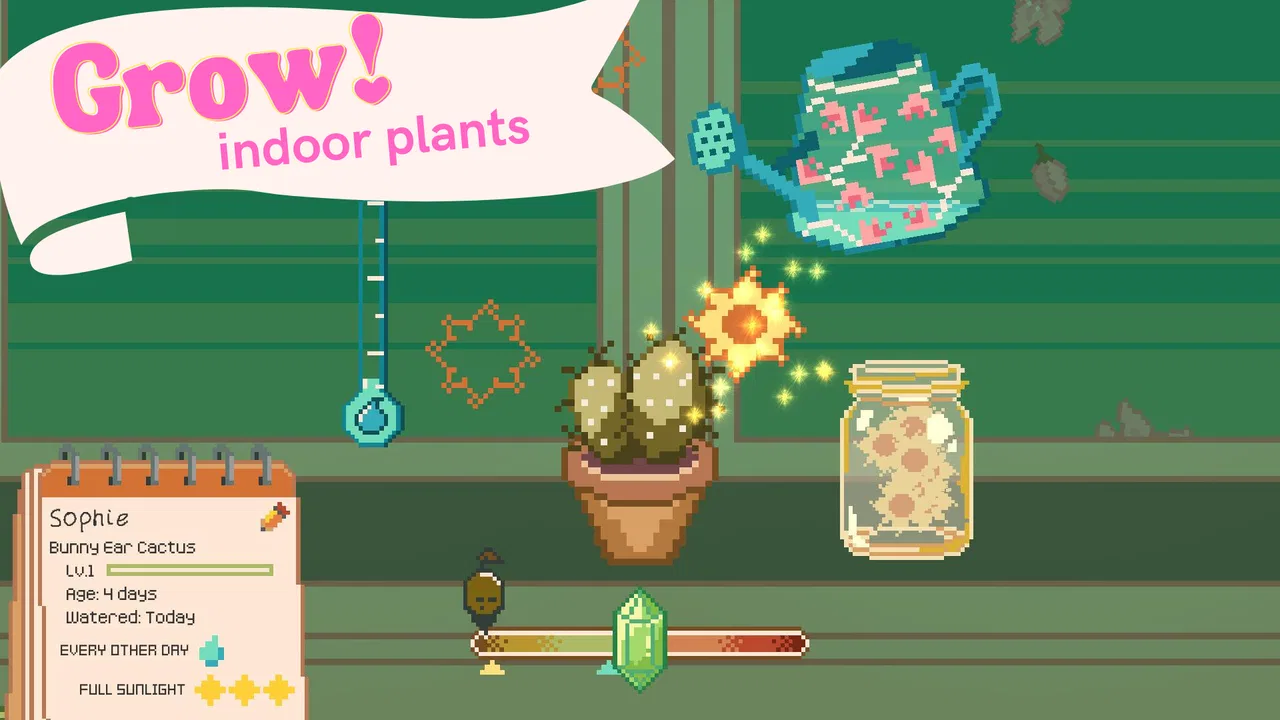
The basic appeal is easy to understand. Instead of asking me to react quickly, solve difficult puzzles, or manage a complicated strategy, the game gives me a cottage garden to look after. The window-garden idea creates a small personal space where plants and music work together. I found that the setting matters as much as the gardening itself, because the mood is the reason I return.
You May Also Like

 Blood Strike: 2.5 Anniversary
Blood Strike’s Loadouts Turn Every Drop Into a Tactical Gamble
A close look at Blood Strike’s custom loadouts: how fast access to signature weapons reshapes its battle royale rhythm, rewards preparation, and narrows the gap between fights.

 Pandora - Music & Podcasts
Pandora’s Music Is Easy to Start, but Harder to Recover
Pandora’s strength is its low-effort path from a seed to a station. Its weak spot is how much confidence it asks you to place in connection, setup, and quiet recovery.

 8 Ball Pool
 Is Built on Rivalries, Rematches, and Routine
A close look at the rivalries, rematches, shared routines, and unanswered safety questions that turn a quick pool match into a persistent mobile community.

 Samsung Music
’s Quiet Strength Is Playing What You Already Own
Its reach comes less from spectacle than from dependable access to a personal library. That simplicity is both the app’s strongest retention engine and its ceiling.

 AccuWeather: Weather Radar
AccuWeather Review: A Quick, Clear Forecast for Everyday Decisions
For everyday plans, the best forecast is the one you can understand quickly. AccuWeather makes rain timing, radar, and local conditions easy to act on, with a few trade-offs.

 Hill Climb Racing
Why Hill Climb Racing Still Turns Crashes Into One More Run
A tiny car, a bumpy hill and one more upgrade: Hill Climb Racing keeps resurfacing because its simple chaos makes every near-miss feel personal.
More From Our News Desk



That makes it useful during moments when a more competitive game would feel like work. I can check in during a study break, leave it nearby while reading, or use it as a soft transition before bed. It is also a better fit for someone who likes decorating and gradual collection than for someone who needs a clear challenge every few minutes.
The music category label is important here. This is not simply a farming game with background audio added afterward. The atmosphere is part of the reason to play, and the experience is best judged by how well it supports relaxation. I would not choose it when I want a strong story, intense objectives, or a deep competitive system.
What the first sessions feel like
My first useful adjustment was to stop treating the garden like a task list. The game becomes more pleasant when I let it sit alongside another activity instead of constantly checking for progress. A short visit can be enough to make the space feel active, while longer sessions are better reserved for arranging the environment and enjoying the presentation.
This approach also makes the game accessible to people who do not usually play games. There is no need to learn a large collection of controls before the central idea makes sense. The cottage setting communicates its purpose quickly: grow, observe, and return when you feel like it.
There is a trade-off, though. The same simplicity that makes the game welcoming can make it feel thin if I expect a large amount of content or a demanding progression path. Players who enjoy optimizing every decision may soon want more systems to analyze. Window Garden works best when the destination is not the only reason to play.
How I would fit it into an ordinary day
A realistic routine would be to open it after breakfast, make a small adjustment to the garden, and then leave it alone while handling other things. Later, during a commute or lunch break, I could return for another brief check. In the evening, I might spend more time with the cottage because the slower pace feels less intrusive than a match-based game.
This kind of use is more comfortable than trying to complete everything in one sitting. It also prevents the idle structure from becoming repetitive too quickly. If I keep demanding a major event every time I open the app, I will probably be disappointed; if I treat it as a small ongoing space, its design makes more sense.
One practical tip is to decide what I want from each visit before opening it. Sometimes I want a relaxing visual break, while at other times I want to make visible progress. Separating those expectations helps me avoid judging a quiet session as unproductive. The game is strongest when I allow its slower rhythm to remain intact.
Progress, spending, and the feeling of pressure
The game is free to download, which makes trying it straightforward. It includes in-app purchases ranging from $1.99 to $11.99 per item. That is the spending context I would keep in mind before starting: the core download does not require an upfront purchase, but optional paid items are part of the experience.
I appreciate that this gives curious players a chance to understand the atmosphere before deciding whether they want to spend anything. For a relaxing game, that matters. I would rather test whether the music, cottage presentation, and idle pace fit my habits than pay first and discover that the slow structure is not for me.
At the same time, free games can create a different kind of pressure even when the mood is calm. A player may begin comparing ordinary progress with paid conveniences or feel tempted to buy something simply to make the garden feel complete sooner. I would approach purchases as optional enhancements to a hobby, not as a requirement for proving that I am playing correctly.
The fairest way to use Window Garden is to set a personal spending boundary before the garden becomes emotionally important. That could mean playing without purchases for a week, deciding on a fixed limit, or treating every item as something to consider only after I have already enjoyed the free experience. This is not about assuming bad intent; it is simply a useful habit for any free-to-play title.
Is the progress relaxing or repetitive?
For me, the answer depends on how often I open it. Short, spaced-out visits preserve the sense of a living garden. Repeatedly checking for immediate changes can expose the limits of an idle format and make progress feel slower than it did at first.
This is one of the less obvious trade-offs. The game’s calm design can reduce frustration, but it can also reduce urgency. There is no reason for me to rush, yet there may also be no strong reason to remain for a long session. That makes it excellent as a companion app and less convincing as my only game.
I would also avoid installing it with the expectation that every session will produce a dramatic transformation. The satisfaction comes from gradual development and the atmosphere around it. If I need frequent rewards, a conventional management game with clearer objectives may be a better choice.
How purchases affect my recommendation
The listed purchase range is broad enough that I would inspect each item carefully before confirming anything. I would not assume that a higher-priced item is necessary, more valuable, or better suited to my style. The right question is whether the purchase adds enjoyment to a garden I already like, rather than whether it will rescue an experience I find boring.
I also would not recommend spending to someone who is still unsure about idle games. The free entry point is useful precisely because it allows that decision to happen gradually. If the game does not feel satisfying without payment, buying something is unlikely to solve the underlying mismatch with its pace.
Families should remember that the Everyone age rating describes the content suitability, not a spending decision. If a child uses the device, I would still use the device’s purchase controls and agree on rules beforehand. That is sensible whenever a free game offers paid items, including a gentle one like this.
Fairness when there is no obvious competition
Window Garden does not present itself to me as a contest against other players. That changes how I think about fairness. I am not looking for equal rankings, tournament balance, or a carefully tuned multiplayer economy. Instead, I care about whether optional spending undermines the peaceful personal routine that makes the game appealing.
From that perspective, the absence of competitive pressure is a positive. I can enjoy my cottage without comparing it with another player’s progress. There is less reason to chase the fastest route or feel that I am falling behind a community. The experience is more personal than status-driven.
Still, noncompetitive does not automatically mean pressure-free. A player can put pressure on themselves when progress is slow, collections feel incomplete, or paid items are visible. My advice is to define success in a way the game supports: a pleasant garden, a relaxing break, or a small daily ritual. If success means maximizing everything, the calm design may start to feel like a chore.
Who should choose this over a usual alternative?
Compared with a conventional farming simulator, this is the better choice for someone who wants less planning and fewer demands. A full farming game usually asks me to manage schedules, resources, upgrades, and larger goals. Window Garden is more suitable when I want the feeling of tending plants without committing to a detailed economic system.
Compared with a standard music player, it offers a stronger sense of place. A music app can play audio while I work, but it does not give me a cottage garden to revisit. Here, the visual setting gives the listening experience a small interactive anchor. That makes it appealing to people who find plain background audio too passive.
Compared with a competitive mobile game, it is far less stressful but also less stimulating. There is no reason to expect the same rush as a rhythm challenge, puzzle match, or online battle. I would recommend it to a friend who wants gentle interaction, not to someone asking for a game that tests timing or skill.
One useful way to decide is to ask what I want my phone to do during quiet moments. If I want it to demand attention, I would choose another category. If I want a soft activity that can share space with real life, this game has a clearer purpose.
Small habits that make the experience better
I found three habits especially useful. First, I would open the game with notifications and interruptions in mind, because a relaxing routine loses some of its value if every visit becomes a demand. Second, I would avoid making purchases during a tired or impatient session. Third, I would take occasional screenshots or simply pause to look at the garden rather than measuring every visit by progress.
Another practical approach is to use it as a transition tool. Opening it for a few minutes after work can create a boundary between a busy day and personal time. The cottage gives that pause a little structure, while the idle nature means I do not need to prepare for a difficult challenge.
For younger players, I would introduce it as a creative, calm game rather than a way to chase rewards. For adults, I would frame it as a digital relaxation space. The same features can feel different depending on expectations, and the game benefits when those expectations remain modest.
What I would check before committing
The current version is 2.2.11, and the game requires Android 7.0 or later. That makes the compatibility requirement worth checking before installation, especially on an older phone or tablet. On a supported device, the more important question is not raw performance but whether the game’s slow, atmospheric structure matches the way I use mobile apps.
I would also think about storage and attention habits in practical terms, without assuming that every device or player will have the same experience. A game designed for repeated visits becomes part of a routine, so I would want enough room for it and enough patience for its pace. If I rarely enjoy returning to the same quiet space, the concept may not hold my interest.
Another question is whether it can replace a dedicated relaxation app. In my view, it can complement one, but I would not automatically treat it as a full substitute. A dedicated music or ambient app may be better when I want uninterrupted audio, while this game is better when I want the audio experience tied to a visible garden.
I would also avoid expecting a detailed plant-care simulation. The appeal is the cozy window setting and the idle rhythm, not the realism of maintaining a real collection of plants. Someone looking for botanical accuracy, complex cultivation, or a serious management challenge should choose a more specialized game.
Who should skip it?
I would skip it if I become restless when a game does not provide immediate objectives. I would also look elsewhere if I need direct competition, a strong narrative, or a clear ending. The cottage atmosphere cannot compensate for a missing feature that is central to the way I play.
Players who dislike in-app purchases may still try the free version, but they should be comfortable ignoring optional items. If the mere presence of purchases makes a game feel uncomfortable, a paid, self-contained alternative may offer a cleaner experience. The listed price range is a reason to stay deliberate, not a reason to assume that spending is unavoidable.
I would be cautious about recommending it as a primary game for someone who wants long sessions. Its value is easier to see in brief visits and background use. A player seeking depth may find the experience more satisfying alongside another game rather than in place of one.
My trust verdict after weighing the trade-offs
My overall view is positive, with a clear condition: Window Garden works when I want a peaceful digital corner, not when I want a demanding game. CLOVER-FI Games has built its appeal around the combination of a cottage garden, music-oriented atmosphere, and gradual interaction. That focus gives it personality, even though it naturally limits the amount of action and strategic depth I can expect.
The free entry point is helpful, and the Everyone rating makes the concept broadly approachable. The purchase range from $1.99 to $11.99 per item means I would still make spending decisions carefully, especially if a child is using the device or if I am prone to paying for faster progress. I would judge the game first on the enjoyment it provides without spending.
Its strong audience response, including a 4.6 average and more than one million installs, makes it an easy title to investigate, but the numbers are not the main reason I would recommend it. I would recommend it because the game understands a specific need: sometimes I want an app that gives me a small, pleasant place to return to without asking me to perform.
My final advice is to try it during a genuinely quiet part of the day. Do not rush through the first session, and do not compare it with a farming simulator or rhythm game on their terms. Give the cottage atmosphere time to work, keep purchases intentional, and notice whether returning to the garden feels comforting or repetitive. If it feels comforting, this is a thoughtful free music game to keep nearby. If it feels repetitive, choosing a more active alternative will be the better decision.
FAQs for Window Garden - Lofi Idle Game
01What is the main objective of Window Garden - Lofi Idle Game?
Window Garden - Lofi Idle Game is designed to provide a relaxing and soothing experience for players. The main objective is to cultivate and nurture a virtual garden on your device. As you progress, you can unlock new plants, decorations, and features to enhance your garden, all while enjoying calming lofi music.
02Is Window Garden suitable for all ages?
Yes, Window Garden is suitable for all ages. Its simple mechanics and peaceful atmosphere make it an ideal game for anyone looking for a stress-free and enjoyable way to spend their time. It's perfect for kids, teens, and adults who appreciate the calming effect of gardening and lofi music.
03Does Window Garden require an internet connection to play?
No, Window Garden does not require a constant internet connection to play. You can enjoy the game offline, making it a great option for those who want to play while traveling or in areas with limited connectivity. However, some features, like updates or in-app purchases, may require a connection.
04Are there any in-app purchases in Window Garden?
Yes, Window Garden offers in-app purchases to enhance the gaming experience. Players can buy additional items, such as special plants or decorations, to customize their gardens. While these purchases can enhance gameplay, they are entirely optional, and players can enjoy the game fully without spending money.
05How does the lofi music enhance the gameplay experience in Window Garden?
The lofi music in Window Garden is carefully curated to create a calming and immersive atmosphere. It enhances the gameplay by providing a relaxing auditory backdrop that complements the visual appeal of the garden. This combination helps players unwind, making it a perfect game for stress relief and mindfulness.
Pros
- Relaxing lofi music enhances gameplay.
- Simple
- intuitive controls for easy play.
- Visually appealing pixel art style.
- Offline play available for convenience.
- Regular updates with new content.
Cons
- Limited plant variety can reduce interest.
- No multiplayer or social features.
- Progression may feel slow for some.
- Ads can interrupt the relaxing experience.
- In-app purchases can be pricey.

Window Garden - Lofi Idle Game
Gallery